Understanding Osteosarcoma in Dogs

A compassionate guide for families facing a difficult diagnosis
What is osteosarcoma?
Osteosarcoma, often abbreviated as OSA, is an aggressive form of bone cancer common in large and giant breed dogs, and in some sighthound breeds. It most often affects the legs but it can originate in other bones (skull, ribs, spine). It grows rapidly, so early diagnosis and care are important.
What signs should I look for?
Signs of OSA vary depending on where the tumor is located. Some dogs show only subtle changes at first, but in others (mainly in Greyhounds), the signs can be acute. Common signs include:
- Limping that doesn’t go away, even with rest or pain medication.
- Swelling or warmth over a bone, usually on a leg.
- Tenderness when the area is touched.
- In more advanced cases, the bone can become weak enough to fracture.
- However, spontaneous (pathologic) fractures are a common presentation in Greyhounds.
If something feels “off” with your dog’s comfort or mobility, trust your instincts and contact your veterinarian.
How will my veterinarian know if it’s osteosarcoma?
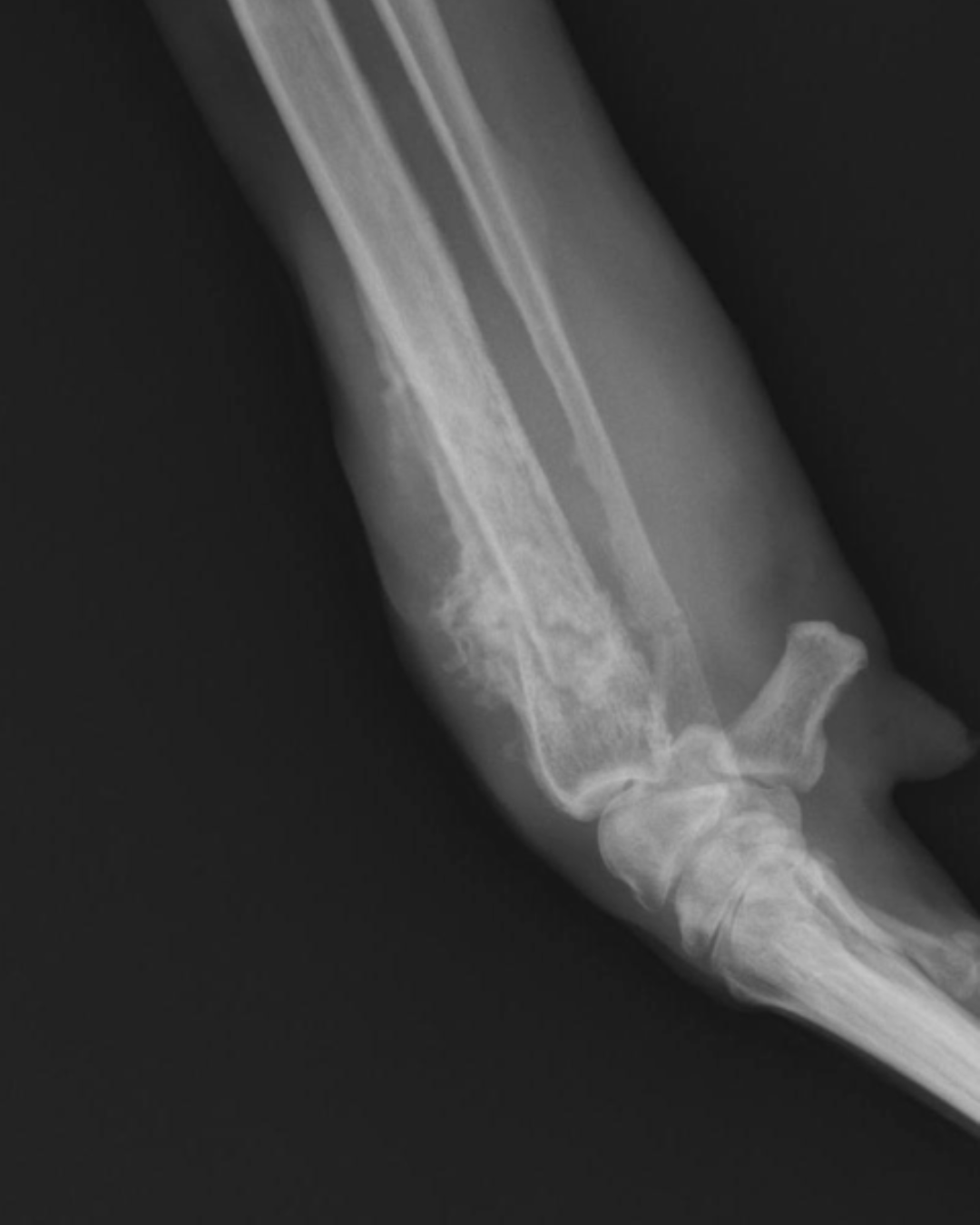
Your veterinarian will start with a physical exam and radiographs (X‑rays), which often provide important clues or even a diagnosis. They may also do bloodwork to check your dog’s overall health. Other diseases, such as infection (osteomyelitis) or benign bone infarcts (bone death due to a thrombus or clot) can mimic OSA on radiographs.
If OSA is suspected, your vet may recommend:
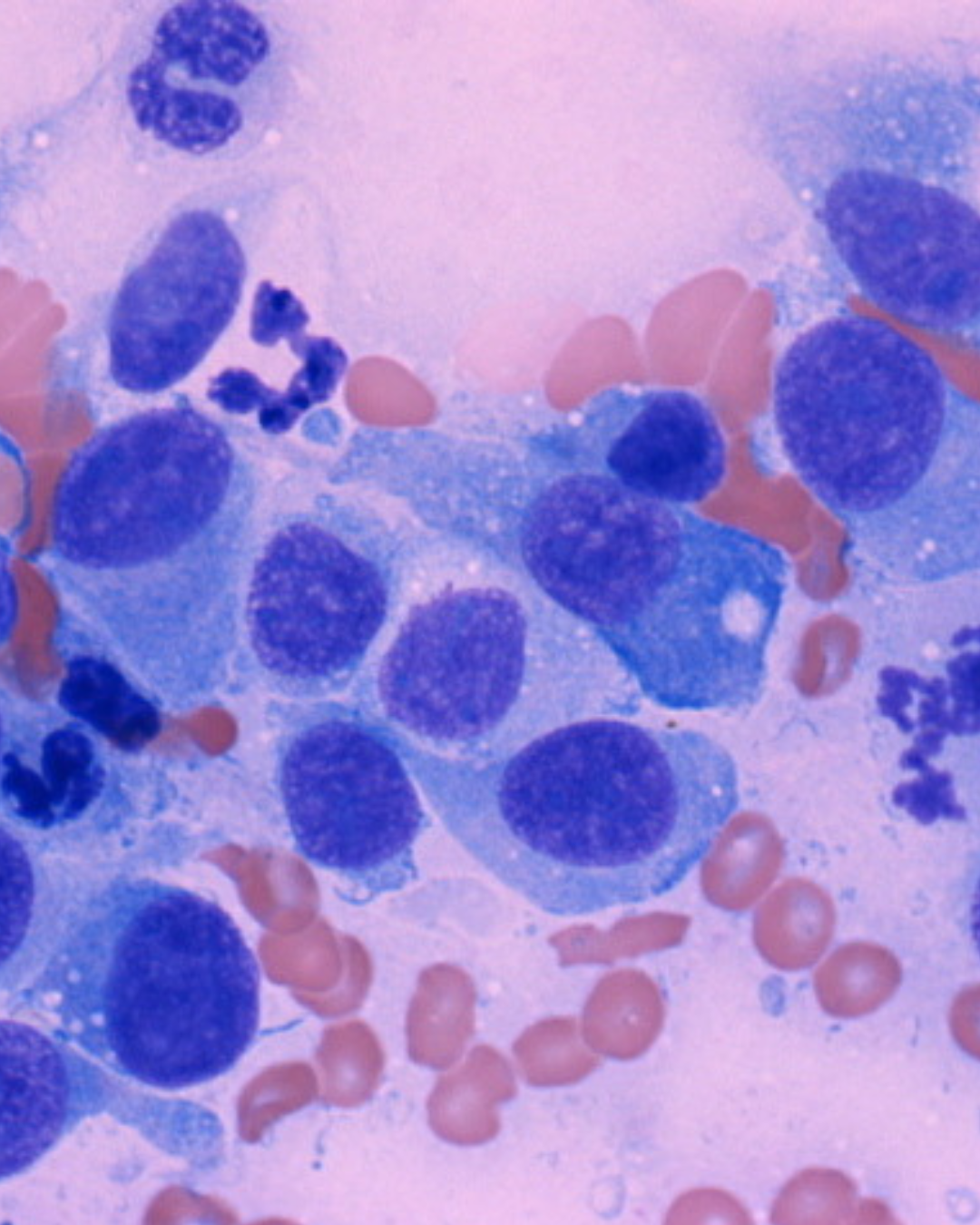
- A fine needle aspirate, which collects a small sample of cells using a hypodermic (i.e.: injection) needle and can frequently be done under mild sedation.
- A bone biopsy, which removes a tiny piece of bone for testing using a large bore needle and requires general anesthesia.
These tests help confirm the diagnosis so you can make informed decisions about next steps.
What should I do if my dog is diagnosed with OSA?
The most important step is to connect with a veterinary oncologist—a veterinarian who specializes in cancer care. They will guide you through treatment options and help you understand what to expect.
You can find a specialist through:
- The American College of Veterinary Internal Medicine (ACVIM): https://www.vetspecialists.com/
- The Veterinary Cancer Society’s directory of oncology specialists
Your oncologist will review your dog’s test results and work with you to create a treatment plan that fits your dog’s needs and your family’s goals.
Is there a cure?
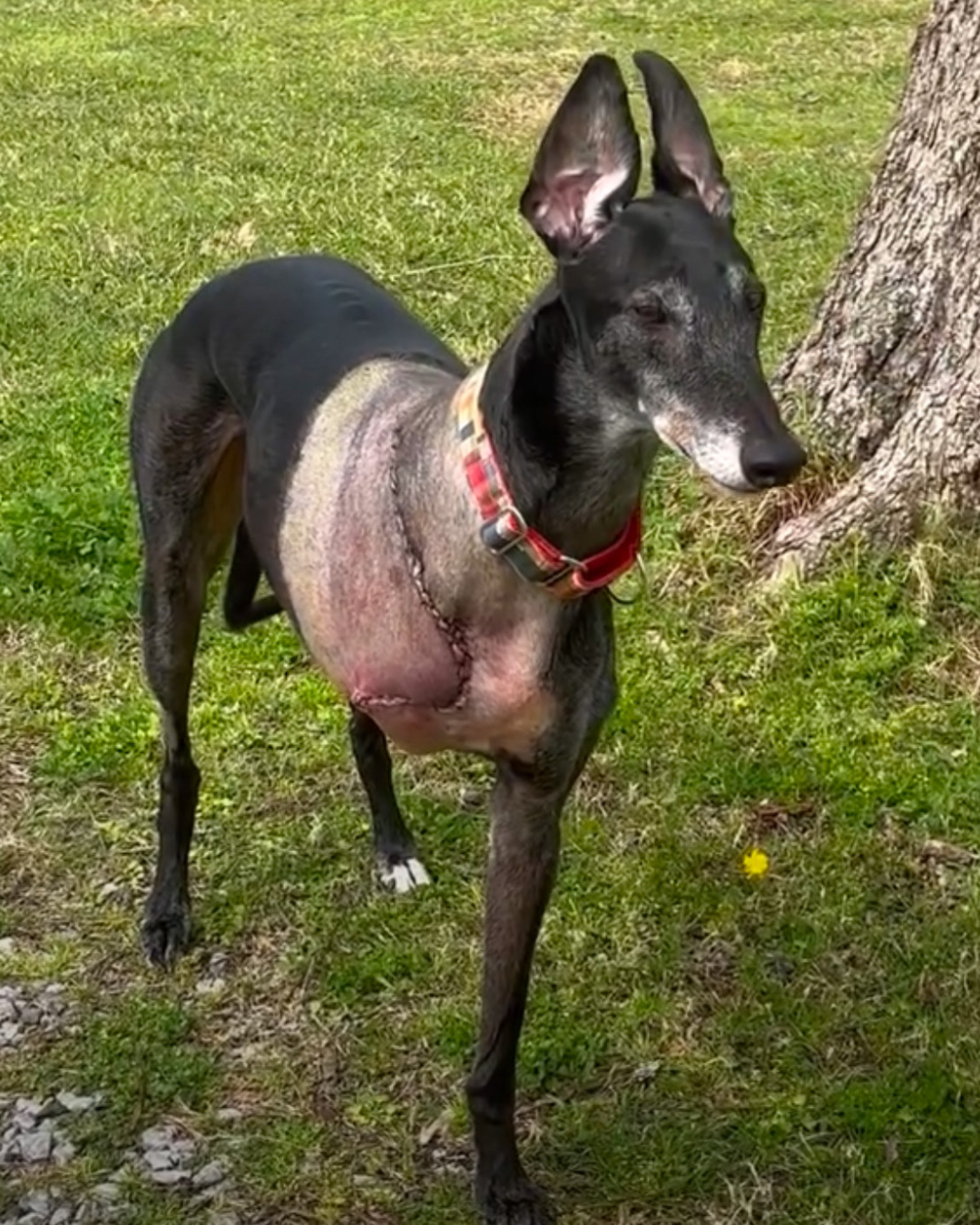
Sadly, there is no cure for osteosarcoma at this time. However, there are several treatments that can extend your dog’s life while preserving or improving their quality of life, including surgery, chemotherapy, radiation therapy, and newer therapies your oncologist can discuss with you. Every dog is unique, and your specialist will help you understand the best options.
Is anyone researching better treatments?
Yes—there is active, promising research underway. The Greyhound Health Initiative (GHI) is currently supporting studies and a clinical trial aimed at finding better ways to treat osteosarcoma and improve outcomes for dogs.
You can learn more about these efforts here:
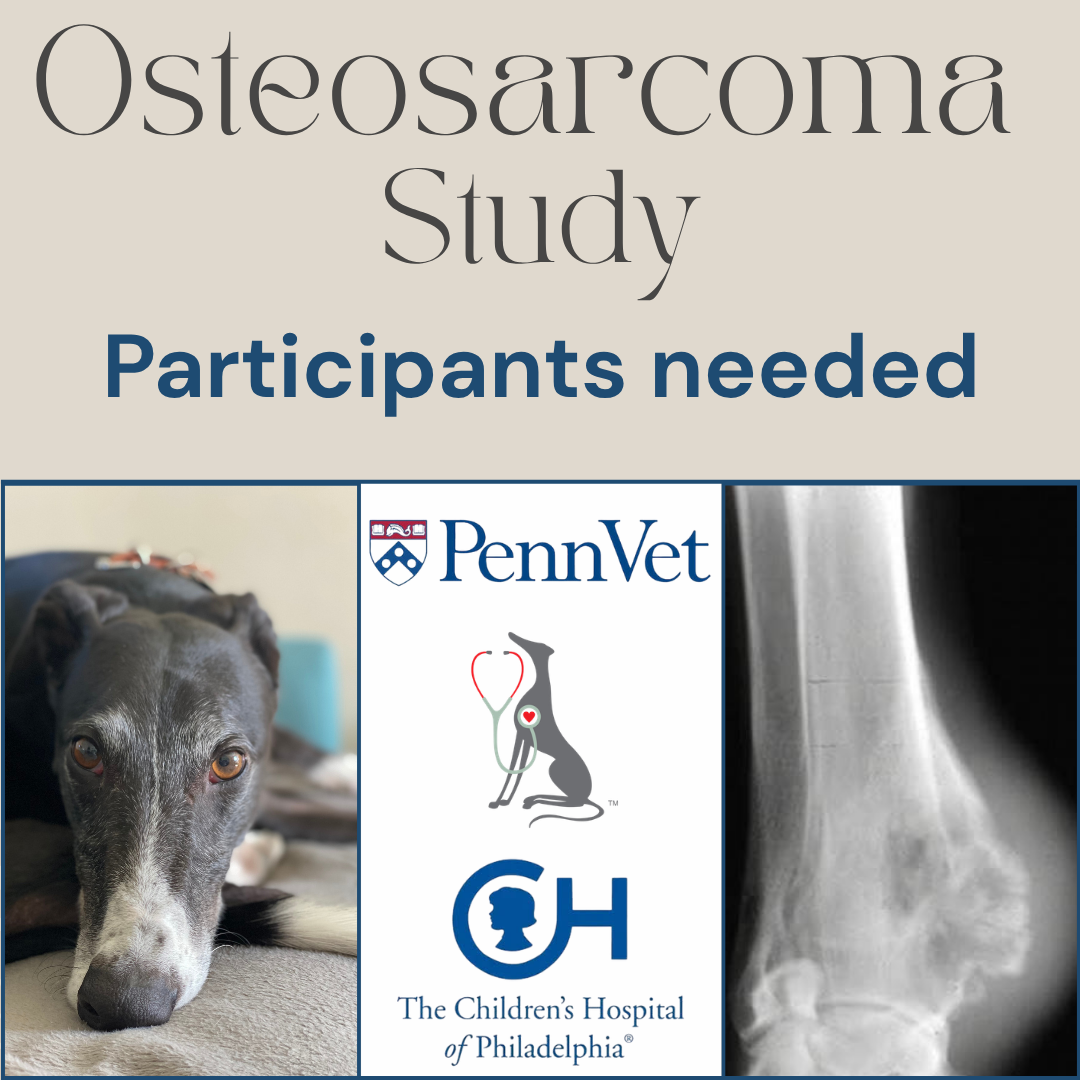
UPenn & CHOP research teams are exploring a new cell-based immunotherapy for dogs with osteosarcoma. Fresh tumor samples collected during amputation are needed for processing. Click here for more information on participating in this study.
This IDEXX Labs study is working to detect osteosarcoma before symptoms appear—using just a simple blood sample. If your dog has been diagnosed and you’d like to contribute to this important research, click to learn more.
If your dog has been diagnosed with metastatic osteosarcoma, they may be eligible for a clinical trial at PennVet. This study explores a promising immunotherapy designed to slow disease progression and reduce lung metastases.
You can also explore additional clinical trials on the ACVIM website.
Additional Resources
These organizations offer education, support, and community for families facing OSA:
Other resources: Bone Cancer Dogs, Veterinary Cancer Society, American Society of Veterinary Internal Medicine, Couto Vet Consultants

Financial Assistance for Families Facing Canine Osteosarcoma
When a dog is diagnosed with osteosarcoma, the emotional weight can feel immense — and the financial strain of treatment often adds another layer of stress during an already difficult time. You don’t have to navigate this alone. Several national nonprofits offer grants, emergency aid, and fundraising support that may help families manage the cost of cancer care and give their pets the comfort and treatment they deserve.
We’ve created a gentle, supportive overview of these organizations to help families explore possible options. Click the link to read the full article and learn more about each resource.
Disclaimer: GHI is not affiliated with, endorsed by, or compensated by any organization listed. Assistance is not guaranteed and is not influenced by GHI.
Learn about OSA in these webinars:
Nothing Found
Related Posts:


Vet Resources
Nothing Found